 Sudoku
 guides by Brian Hamilton and Karan Hamilton.
Our articles are written for real solving decisions, reviewed for clarity, and updated when examples or tools change. See our editorial standards, puzzle testing process, or send a correction.
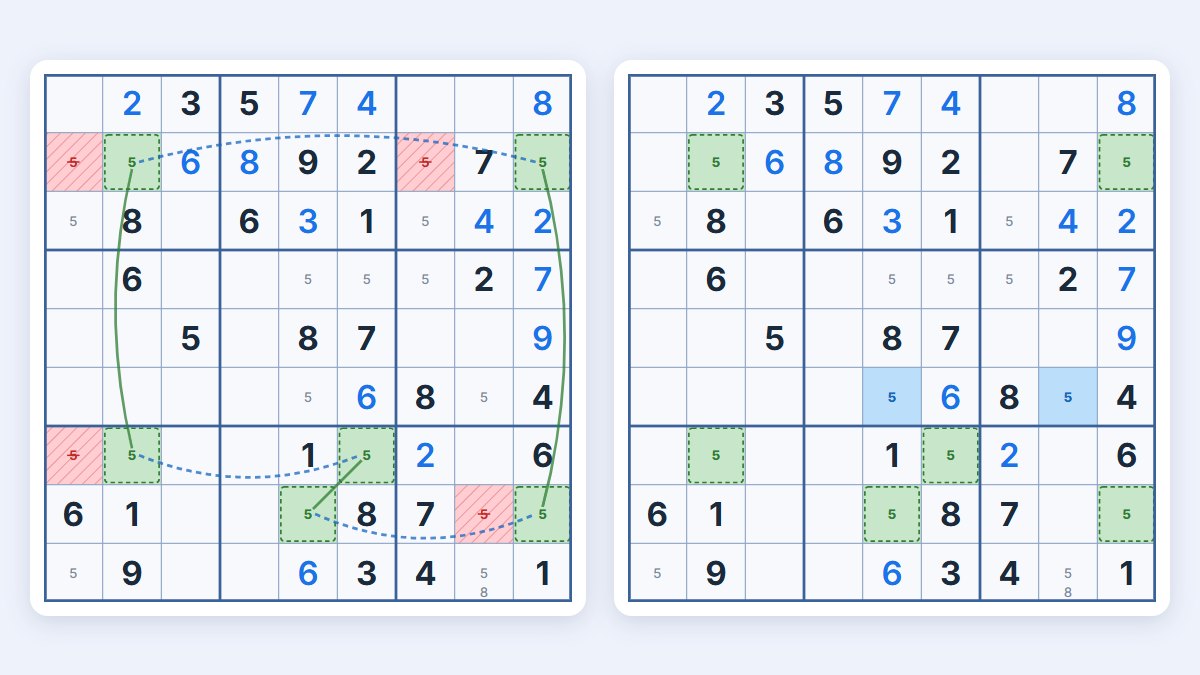
X-Cycles and X-Chains in Sudoku: Nice Loops on Real Boards
X-cycles, X-chains and nice loops follow one digit through strong and weak links: the three loop rules on real Evil boards, and how often they help.
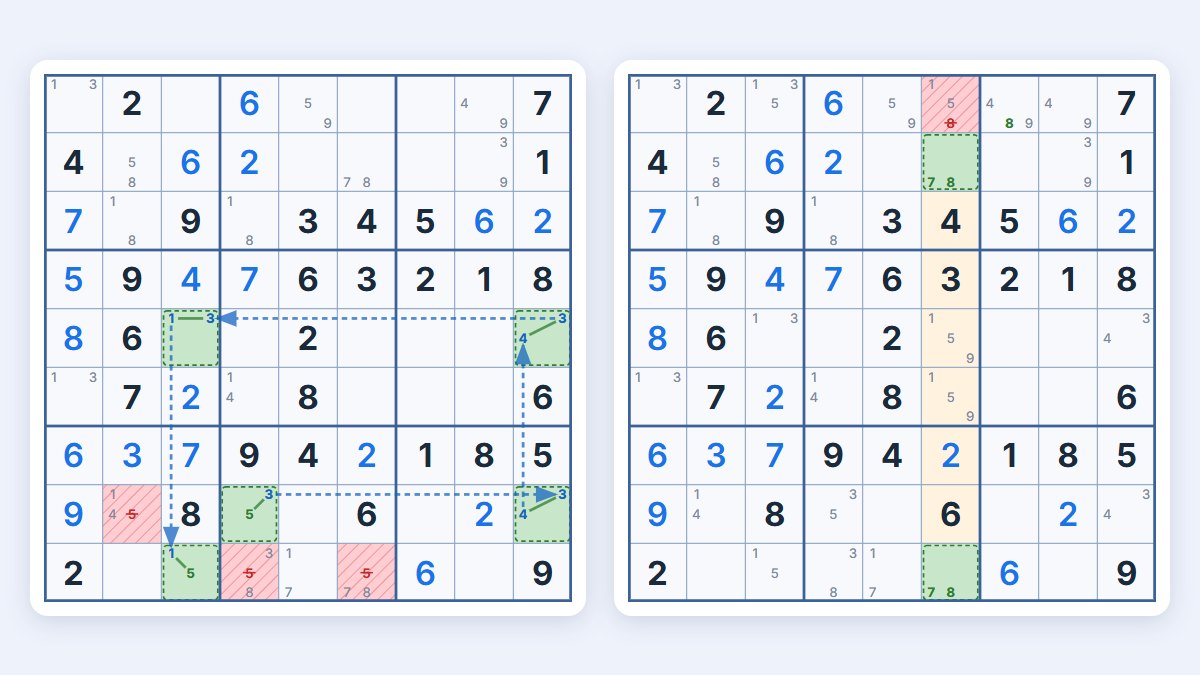
XY-Chain Sudoku Technique: How It Works and How to Find One
An XY-chain links two-candidate cells so one end must hold a digit. How each link works, how to find one by hand, and how often it breaks an Evil stall.
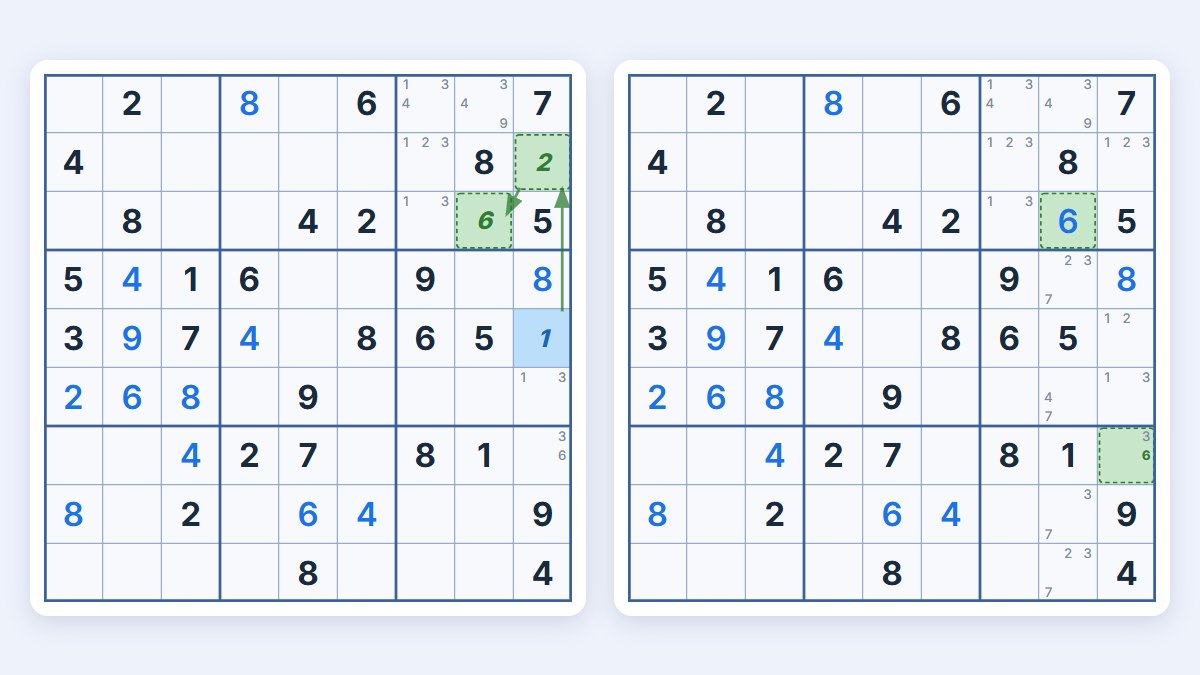
Forcing Chains in Sudoku: Cell, Digit and Nishio Chains
Forcing chains try every option and keep what they agree on. Cell, digit and Nishio chains on real Evil boards, and how often they are the only way on.
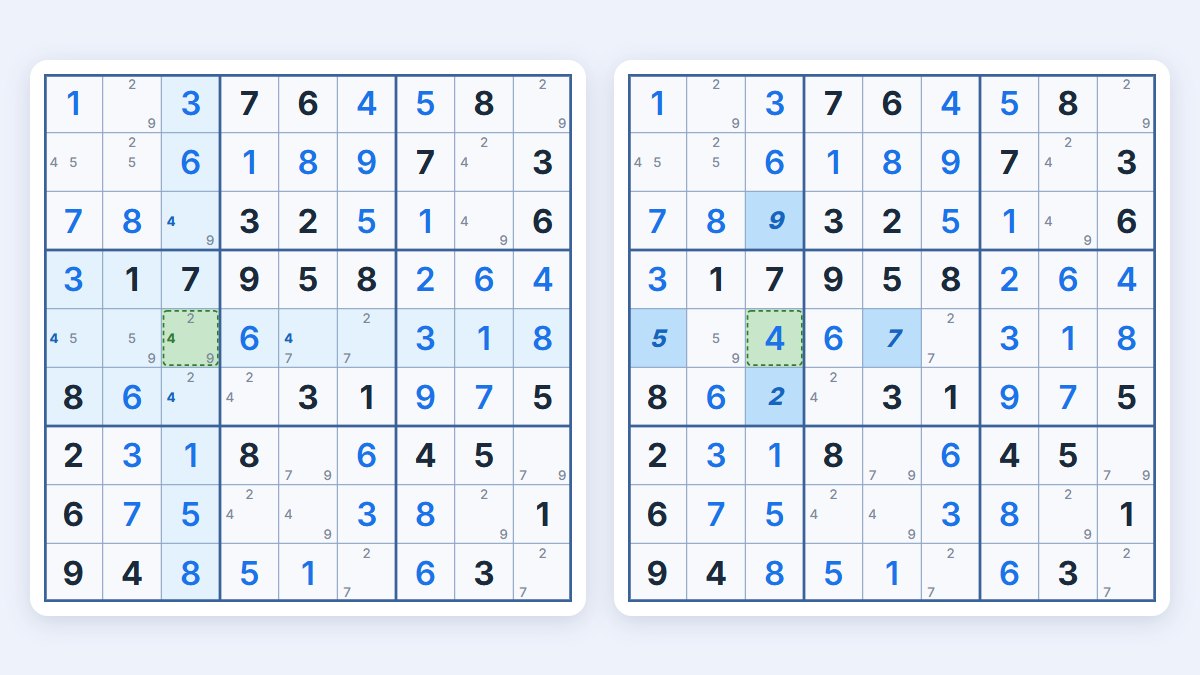
BUG Sudoku Technique: the Bivalue Universal Grave (BUG+1)
When every open cell but one has two candidates, BUG+1 names the answer. A real Evil board before and after, why it needs one solution, and how rare it is.

Games Like Sudoku: KenKen, Kakuro, Futoshiki and More
Eleven games like sudoku, sorted by what each keeps from it: KenKen, Kakuro, Futoshiki, Nonograms, Queens and more, and where to play them here.

Sudoku Dark Mode: Play Online in a Low-Glare Theme
Play classic Sudoku in dark mode and learn how the site-wide sun/moon toggle works across all our Sudoku games.

Sudoku Pencil Marks: Full Candidates, Corner Marks and Notes
Sudoku pencil marks on a real Hard board: 176 candidates against 26 corner marks, an answer only the marks show, and what our Notes buttons do.

Sudoku Variations List: 41 Variants Sorted by the Rule They Add
Every sudoku variant we host, sorted by what it changes: grid, symbols, extra regions, hidden rules, marks, lines or sums, plus a few we don’t host.

Electronic Sudoku: Handheld Games, Consoles, Tablets and Apps
Electronic sudoku, checked in October 2026: which handheld games are still sold, sudoku on the Switch, setting up a tablet, apps and websites.

Sudoku Techniques: Every Strategy in Order, and When You Need It
Every sudoku technique we teach, in the order our helper tries them: what each looks for and which level needs it. Easy to Expert stop at naked pairs.

Sudoku Strategies for Beginners: A Step-by-Step Routine
Sudoku strategies for beginners on a real Easy board: counting a row, cross-hatching, naked and hidden singles, and what to check after every move.

Sudoku Terms: Glossary of Grid, Candidate and Technique Names
Sudoku terms defined and linked: grid parts, candidates, strong links, every technique from naked singles to BUG, our game buttons and variant words.

Mathematics of Sudoku: Counting Grids, Clues and Symmetry
The mathematics of sudoku, checked on real boards: how many grids exist, why a Latin square isn’t a sudoku, and why every puzzle needs certain clues.

Sudoku Difficulty Levels: How Easy to Expert Are Built and Rated
What sudoku difficulty levels mean, how rating programs grade puzzles, and how our six levels are built, measured on the puzzles we actually deal.

Sudoku Mistakes: How a Wrong Digit Hides and How to Find It
Common sudoku mistakes on real boards: a missed mark, a false pointing pair, X-Wing hunting, how long a wrong digit hides, and what our mistake count does.

Rules of Killer Sudoku: How to Play and Where to Start
Killer Sudoku rules in plain words: cages, totals, no repeats and one-cell cages, then the first moves of a real Easy board from our generator.
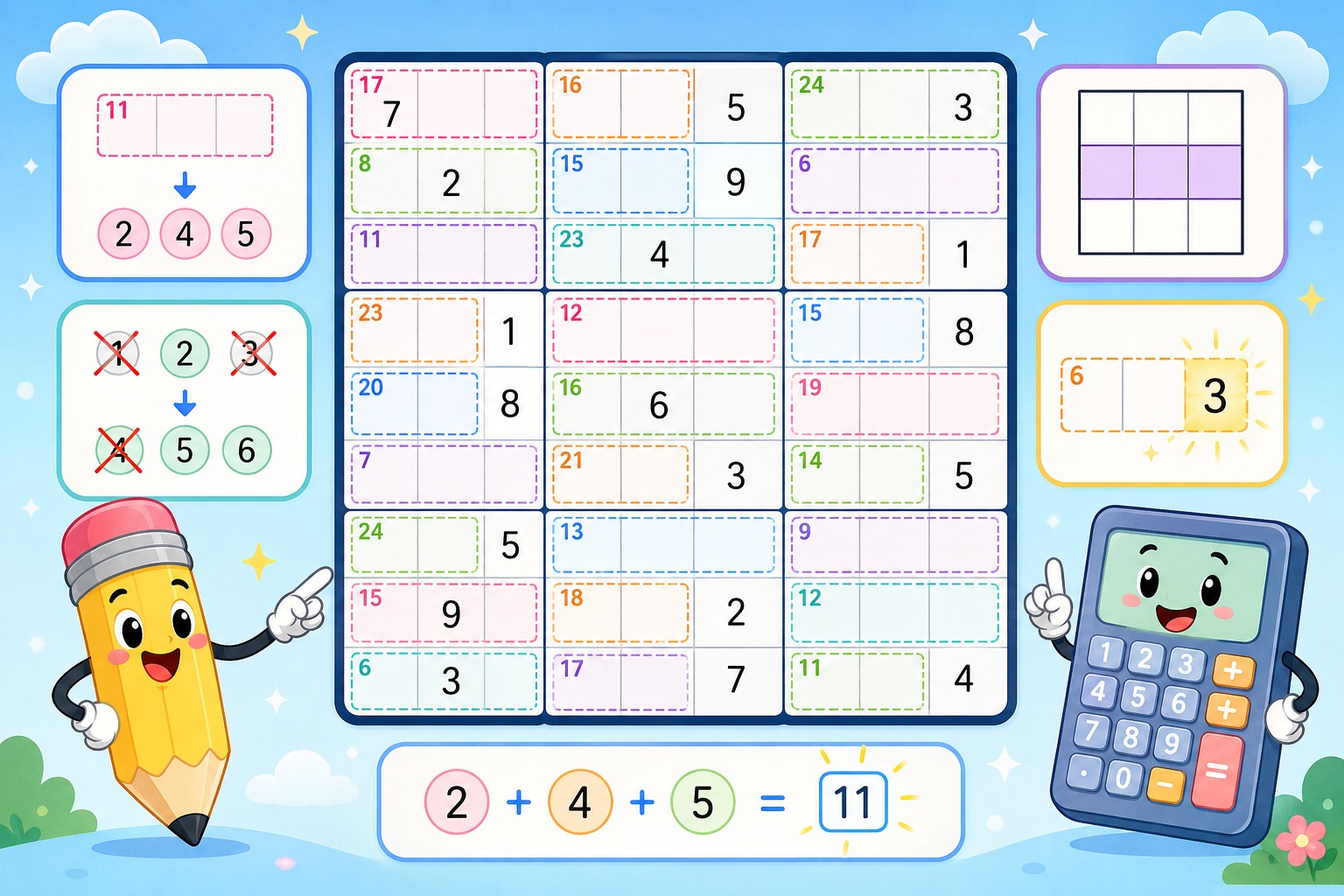
Killer Sudoku Tips and Strategies: What to Try, and When
Killer sudoku strategies in the order you need them, measured on 1,200 of our boards: what each level needs, and one Hard board from start to finish.
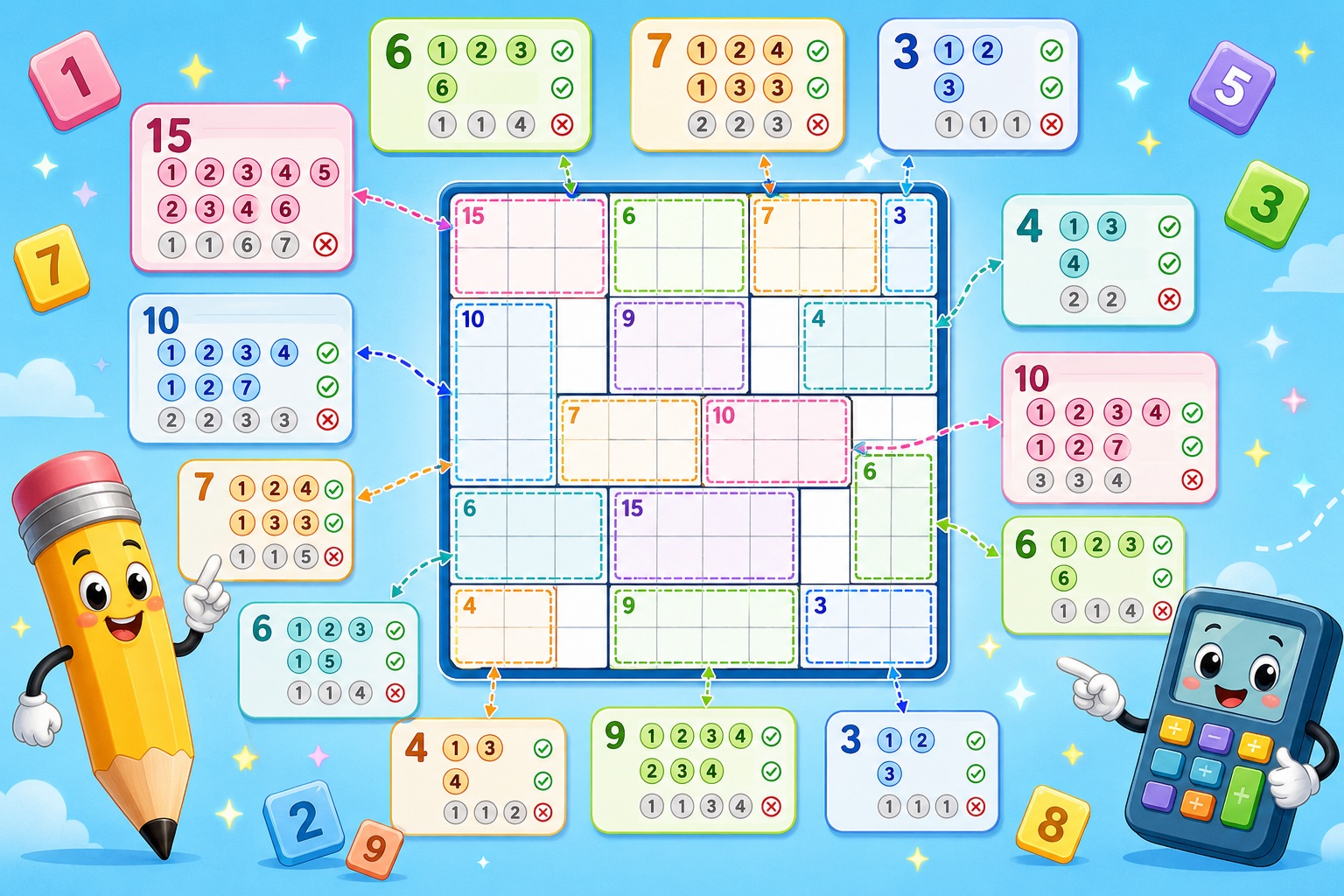
Killer Sudoku Combinations Chart: Every Cage Size and Total
Every killer sudoku combination for cages of 2 to 9 cells, generated by code, with the digits each total must or cannot hold, used on real boards.
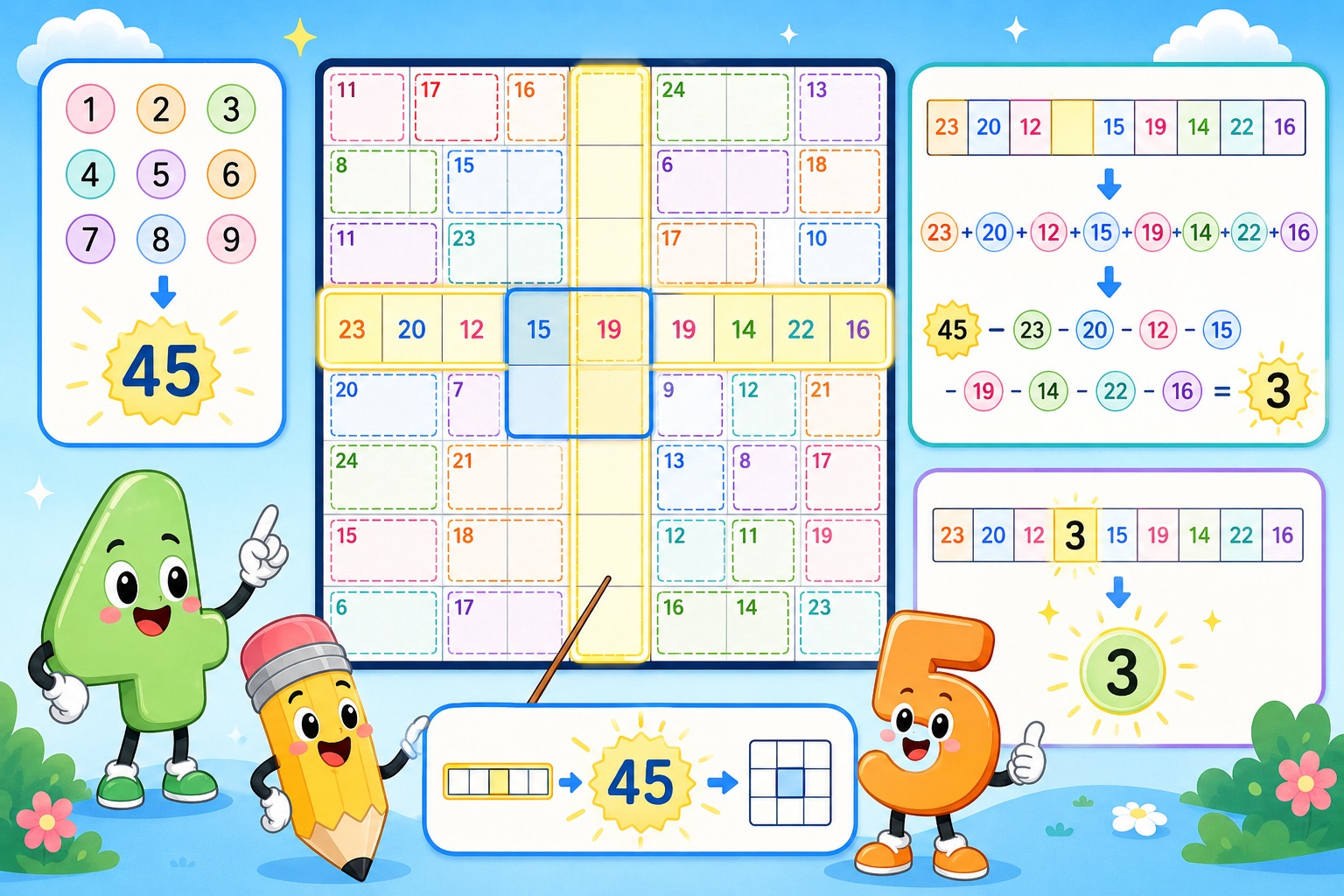
Rule of 45 in Killer Sudoku: Innies, Outies, 90 and 135
The rule of 45 in killer sudoku on a real Expert board: one innie, a two-cell leftover, an outie of two rows, and how often each level needs it.
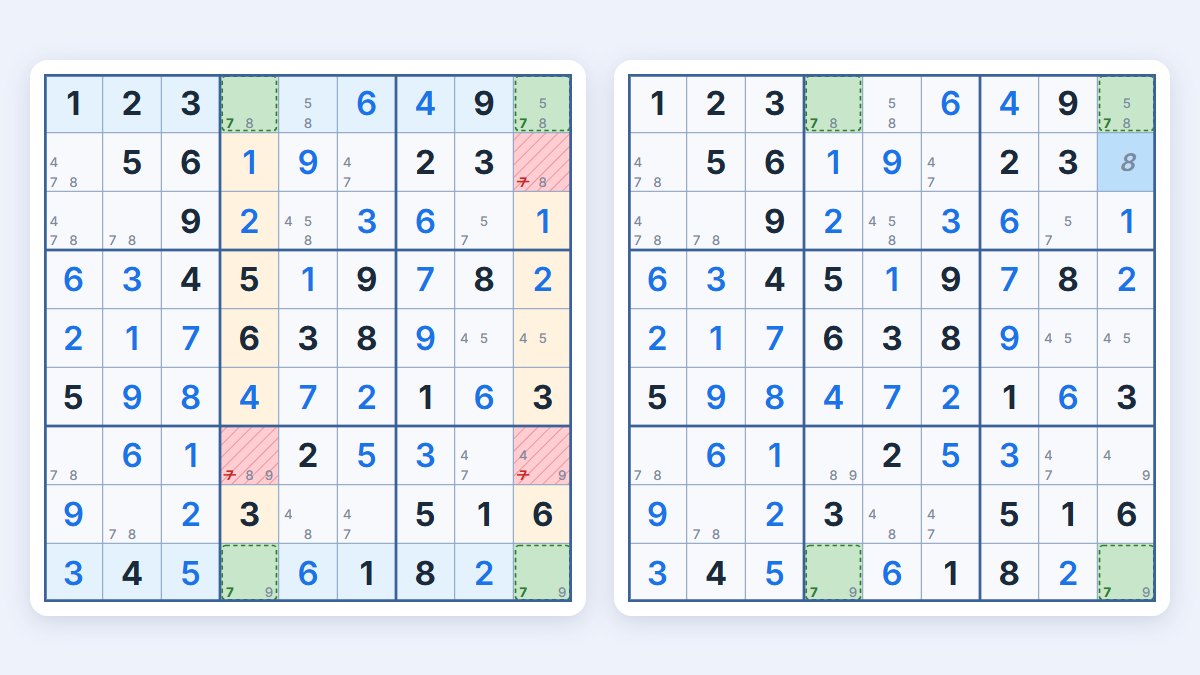
X-Wing Sudoku Technique: How to Spot It and When You Need It
How the X-Wing sudoku technique works, shown before and after on a real Evil puzzle: rows or columns, how to spot one, and how often you need it.
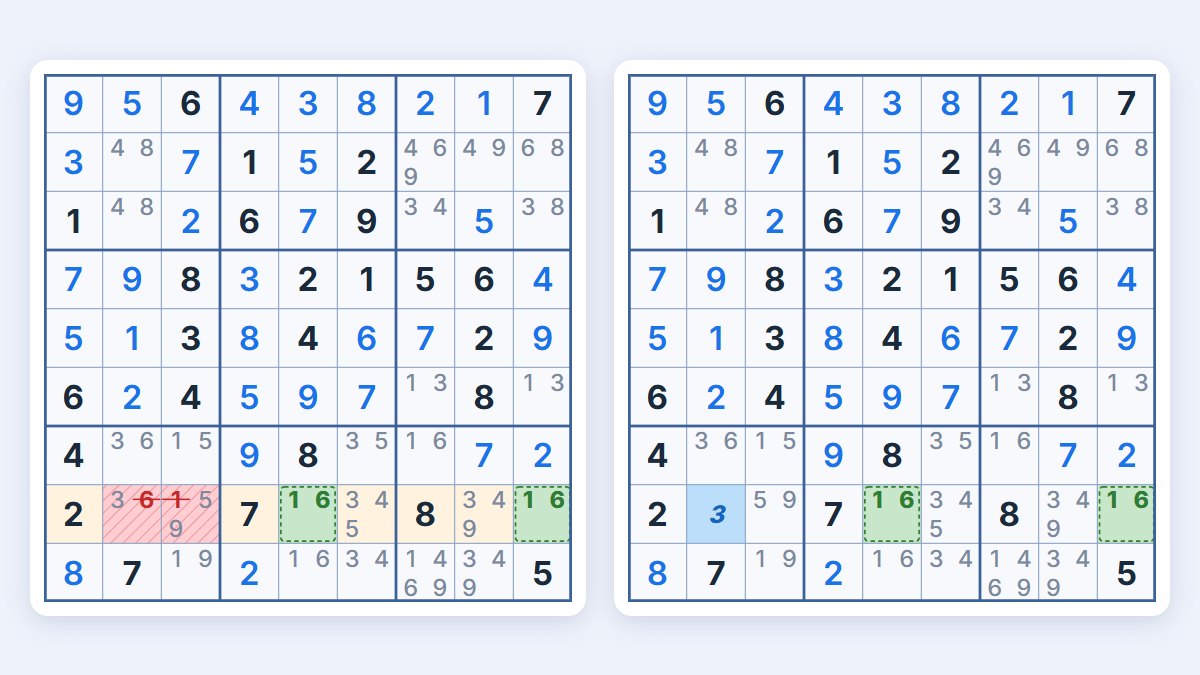
Naked Pairs in Sudoku: How to Find & Use Them
A naked pair is two squares in a row, column or box with the same two candidates. See one on a real Expert board, before and after, and when you need one.
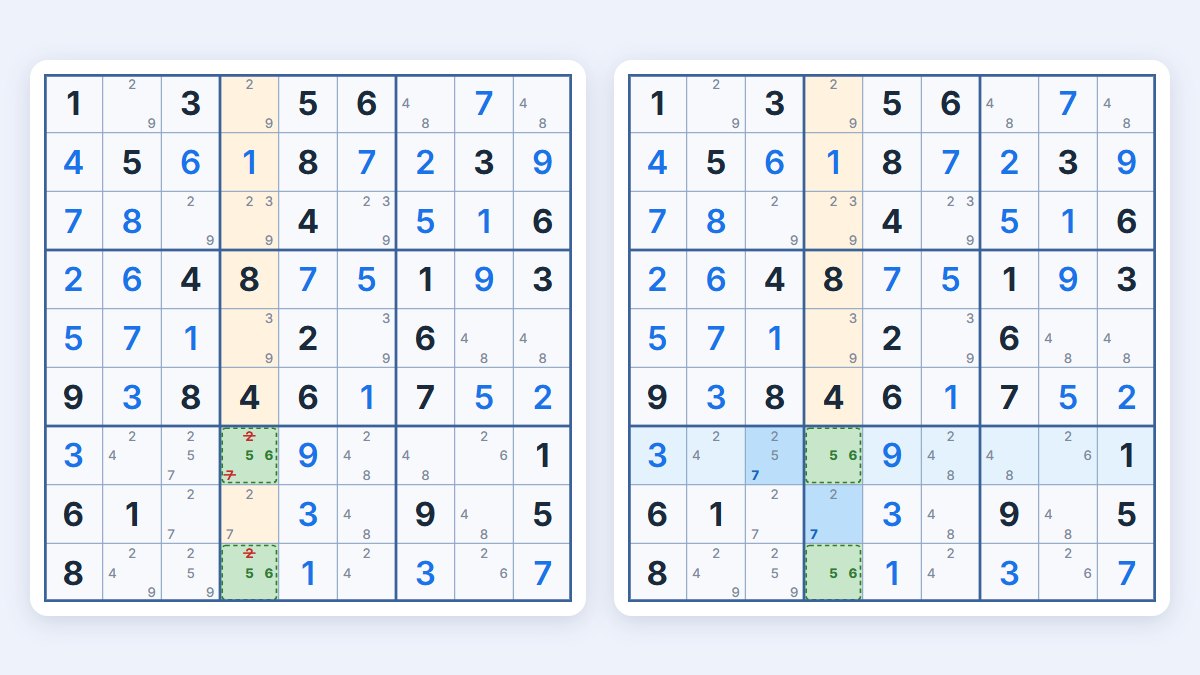
Hidden Pairs in Sudoku: How to Find Them and What They Unlock
A hidden pair shown before and after on a real Evil puzzle: how to find two digits with the same two cells, and why our classic levels never need one.
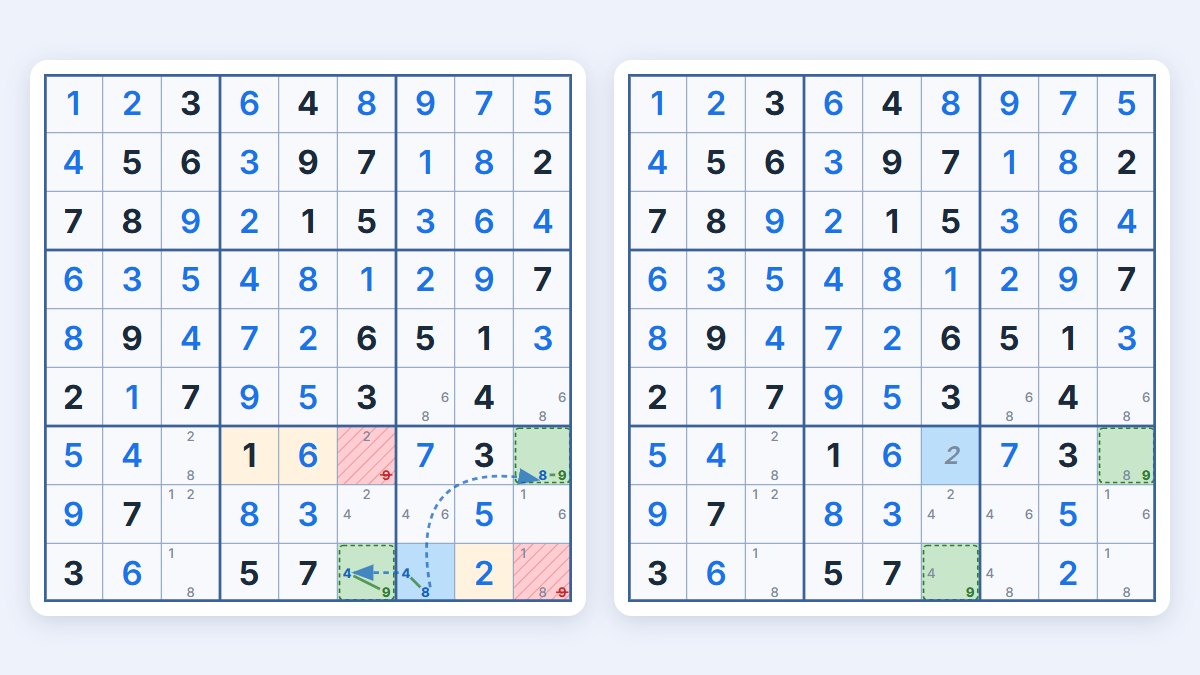
XY-Wing (Y-Wing) Sudoku Technique, Shown on Real Evil Puzzles
The XY-Wing (Y-Wing) on real Evil puzzles, before and after: why it works, which cells lose the digit, how to find one and how often you need it.
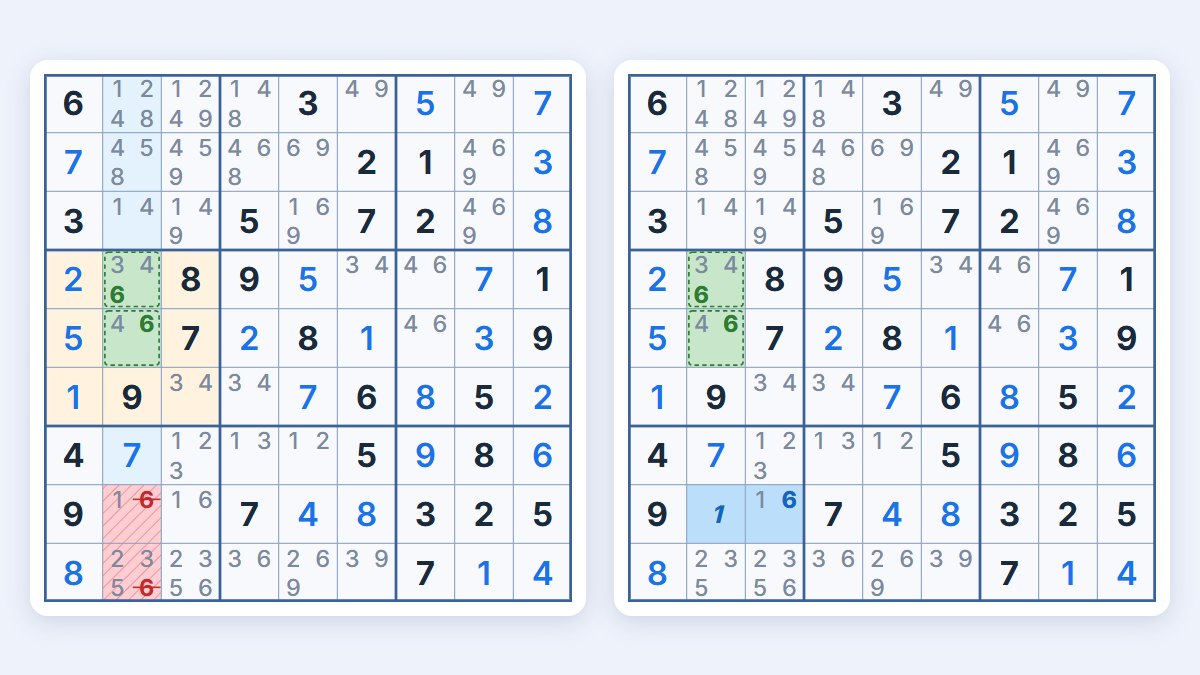
Pointing Pairs in Sudoku: How to Find and Use Them
A pointing pair on a real Hard puzzle, before and after: why a digit locked to one line of a box leaves the rest of that line, plus pointing triples.
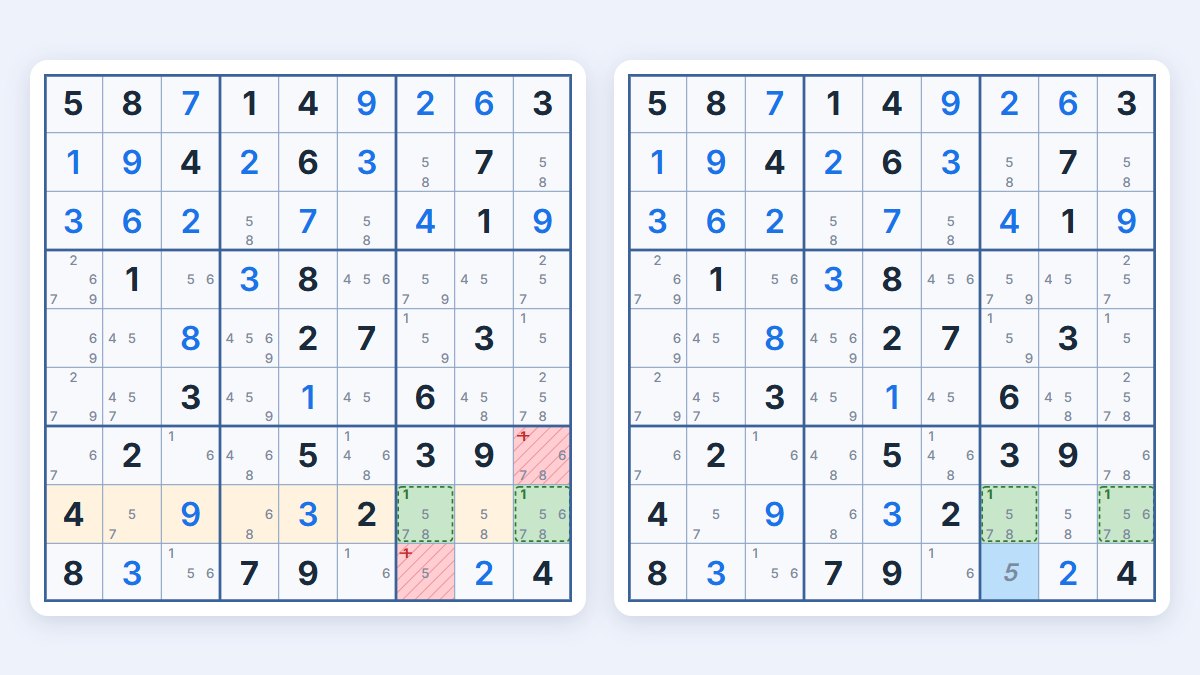
Box/Line Reduction (Claiming) in Sudoku, Shown on Real Puzzles
Box/line reduction, or claiming, on a real Hard puzzle: before and after, with and without pencil marks, and why pointing pairs seem to come up more.
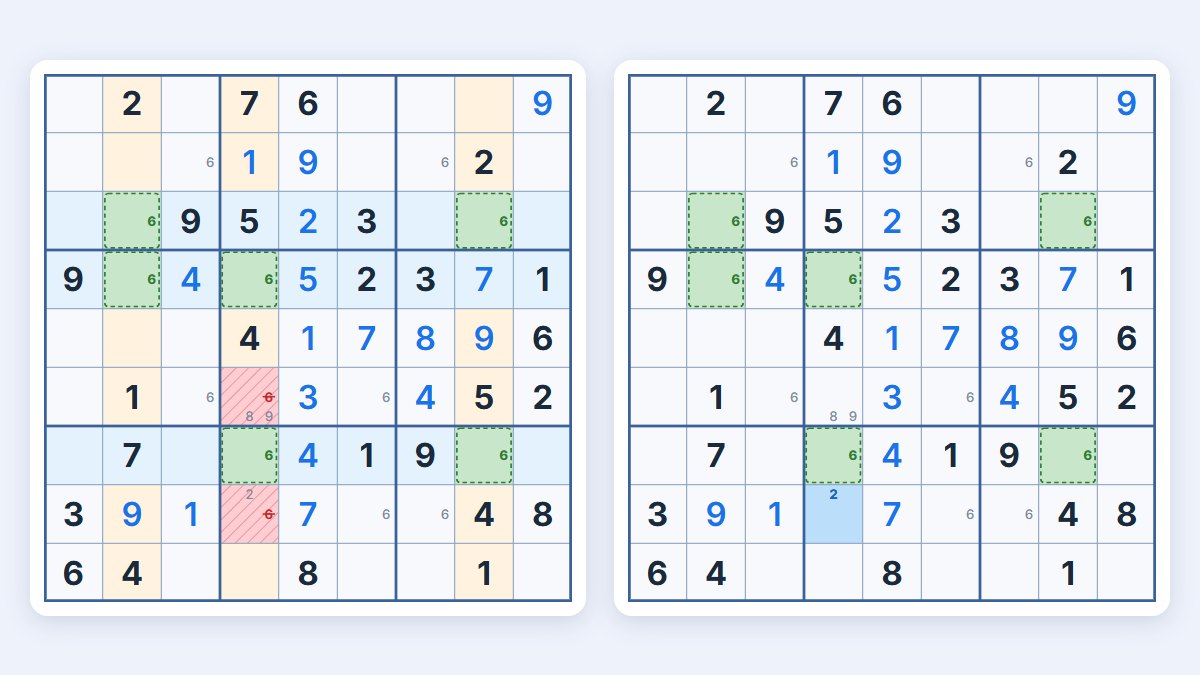
Swordfish in Sudoku: How It Works and Why You Rarely Need One
A Swordfish shown before and after on real Evil puzzles: why three rows lock a digit into three columns, how to spot one, and why it is rarely needed.
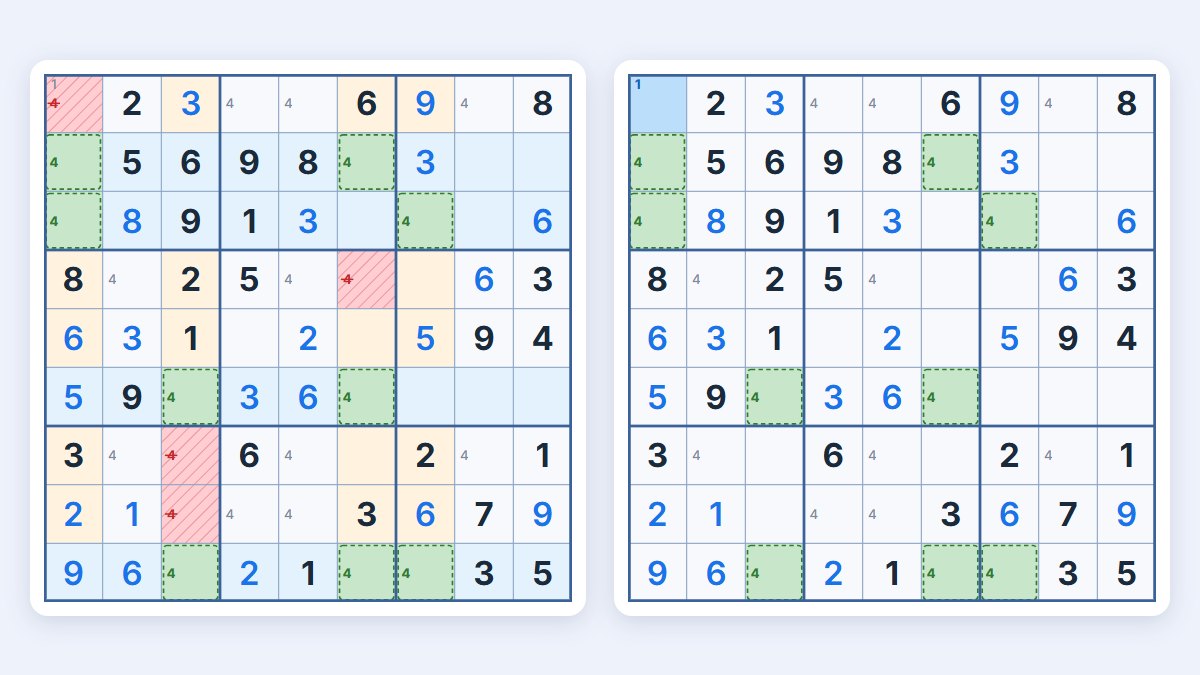
Jellyfish Sudoku Technique: How It Works and Why It’s So Rare
A Jellyfish shown before and after on a real Evil puzzle, with its twin: why it works, how to spot one, and why only 7 of our 5,000 Evil puzzles need it.
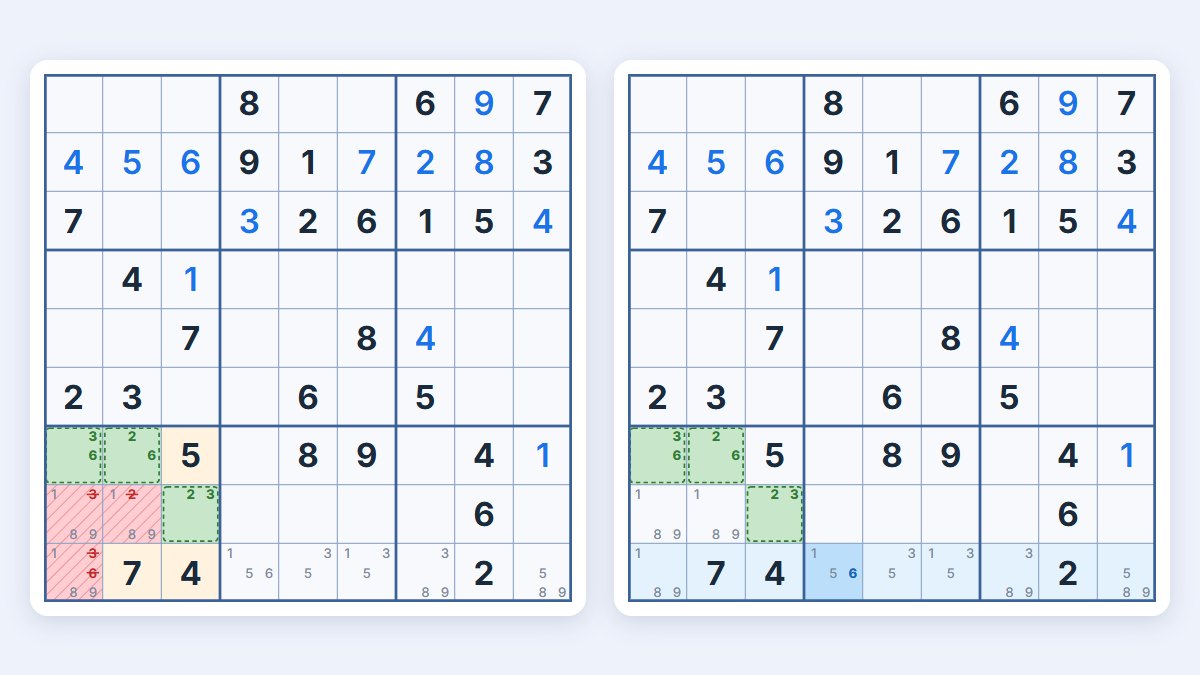
Naked Triples in Sudoku: How They Work, Shown on a Real Puzzle
A naked triple before and after on a real Evil sudoku: why no cell needs all three digits, how to spot one, and why it is needed less often than a pair.
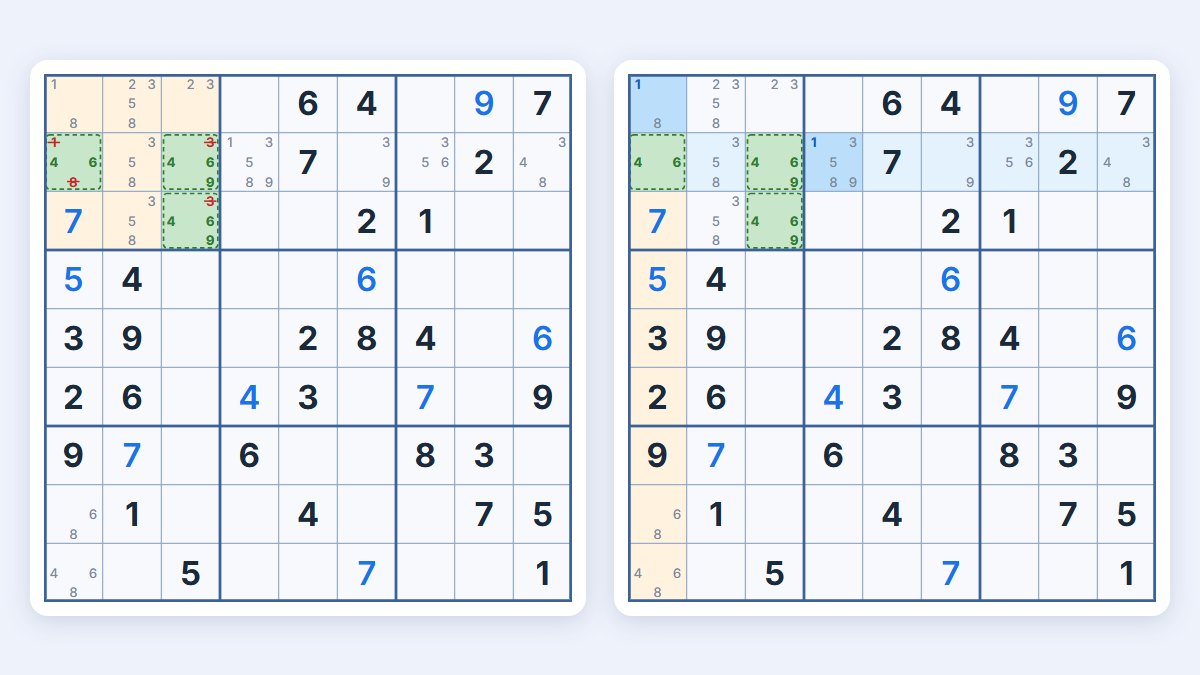
Hidden Triples in Sudoku: How to Spot Them and Why They Are Rare
A hidden triple before and after on a real Evil sudoku: how to find three digits that share three cells, and why it is the rarest subset move.
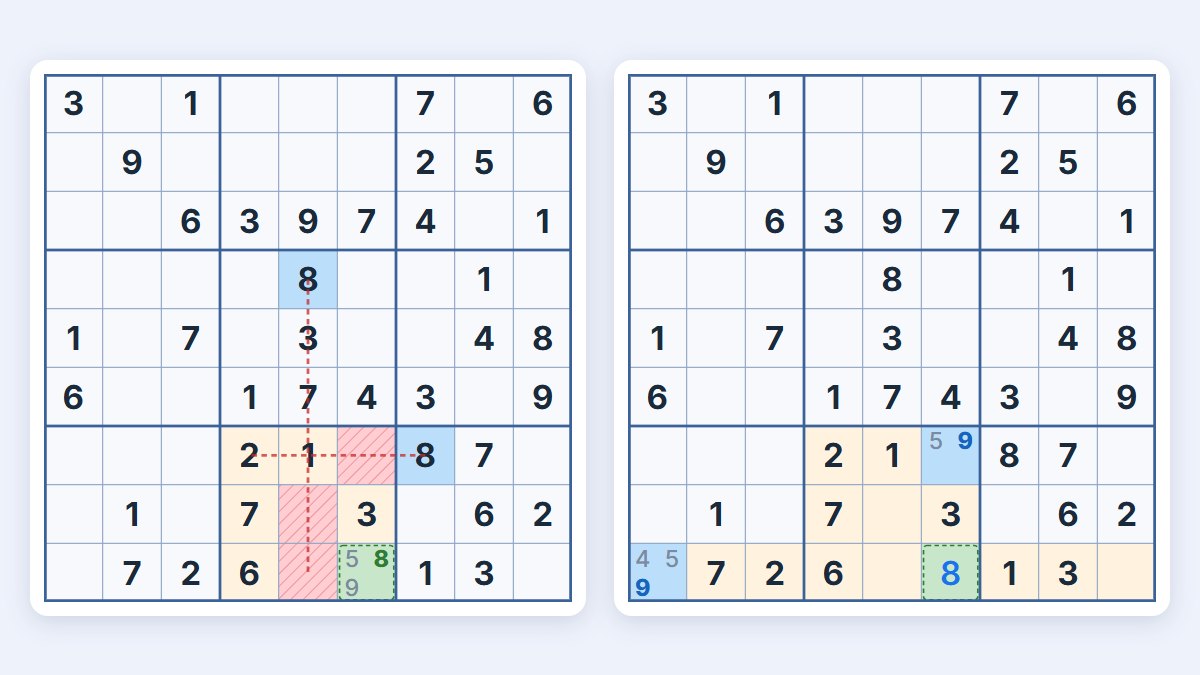
Hidden Singles in Sudoku: How to Find Them by Cross-Hatching
A hidden single is a digit with one place left in a row, column or box. Find one by cross-hatching on a real board, and see when our levels need them.
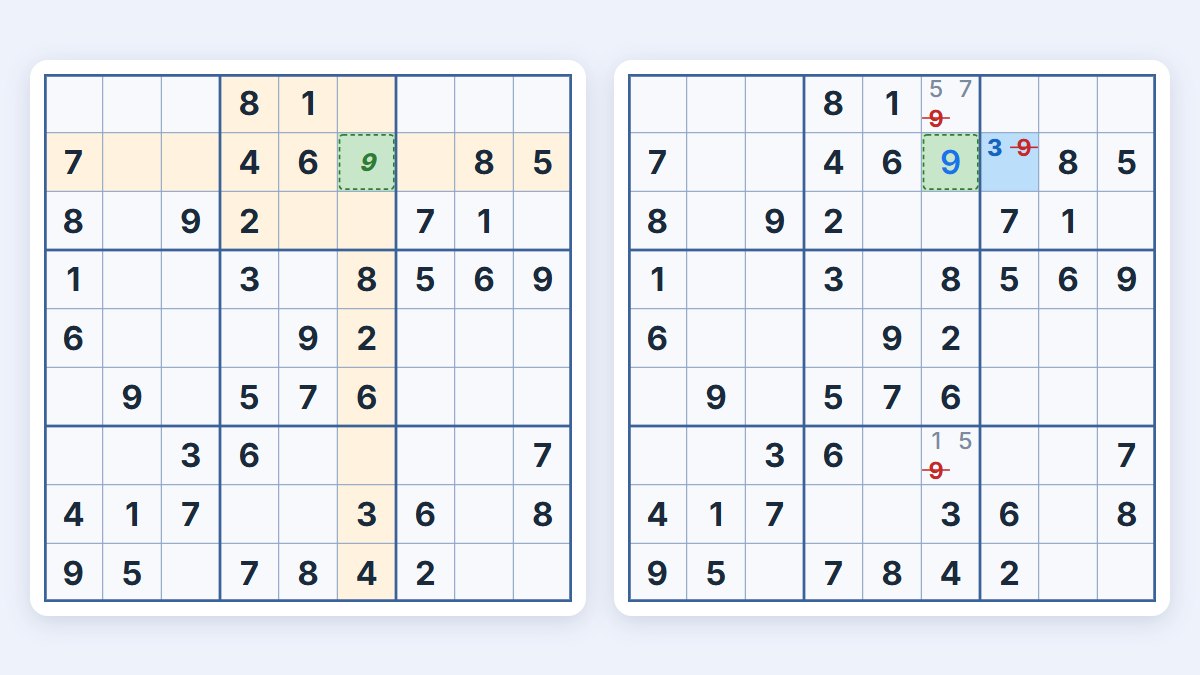
Naked Singles in Sudoku: How to Find & Use Them
A naked single is a cell with only one candidate left. Find one on a real Easy board, see what it unlocks, and how far naked singles get at each level.
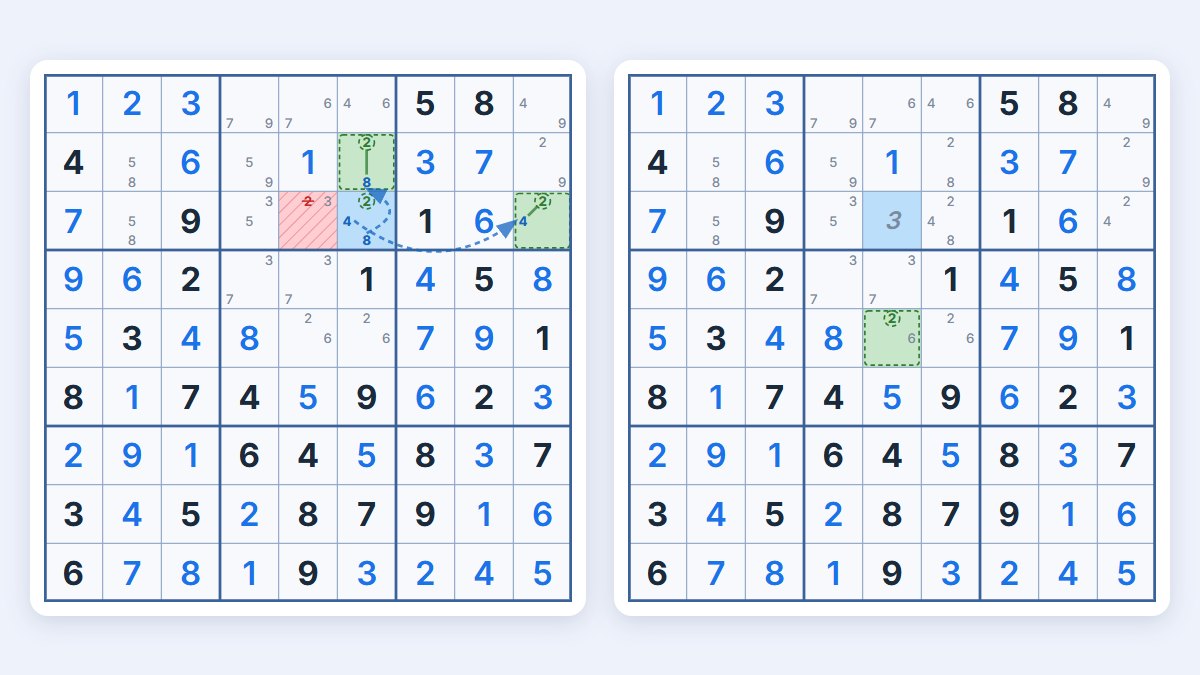
XYZ-Wing Sudoku: How It Works and the Two Cells It Can Clear
An XYZ-Wing on a real Evil puzzle, before and after: why it works, the only two cells it can clear, and how often our puzzles need one.
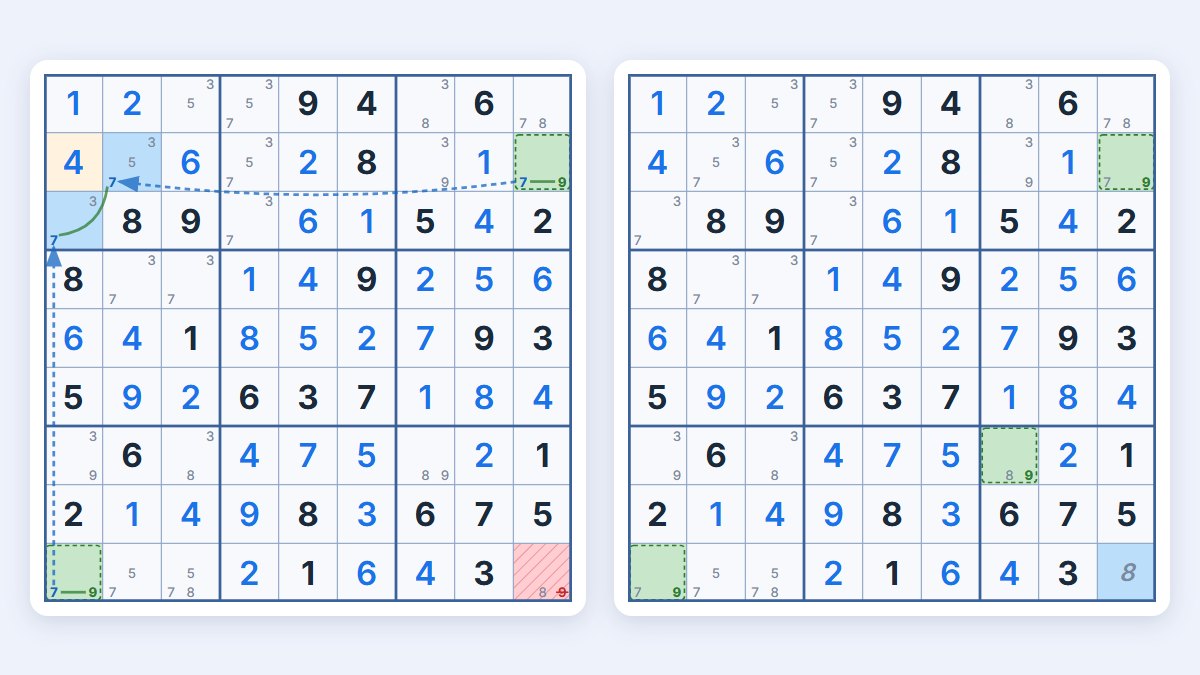
W-Wing Sudoku Technique: Two Matching Cells, One Strong Link
How the W-Wing sudoku technique works, shown before and after on a real Evil puzzle, plus the one link it can’t use and how often you need it.
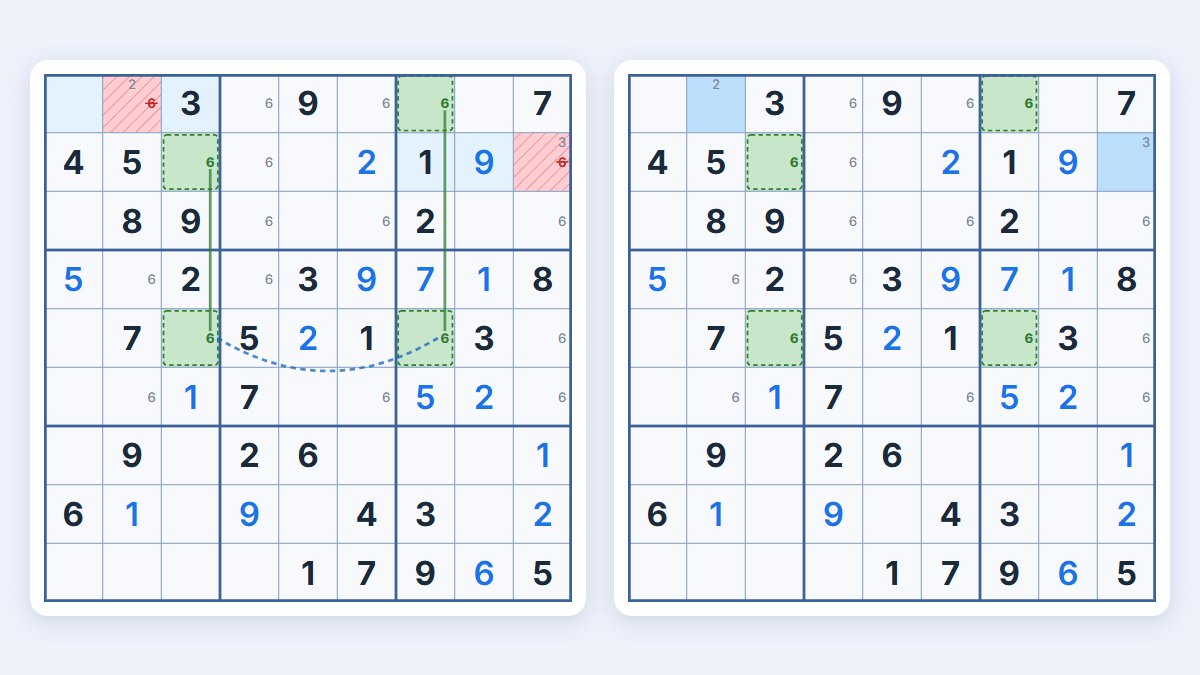
Skyscraper Sudoku Technique: How It Works on Real Puzzles
The Skyscraper sudoku technique on real Evil puzzles, before and after: why it works, the only squares it can clear, and how often our helper needs one.
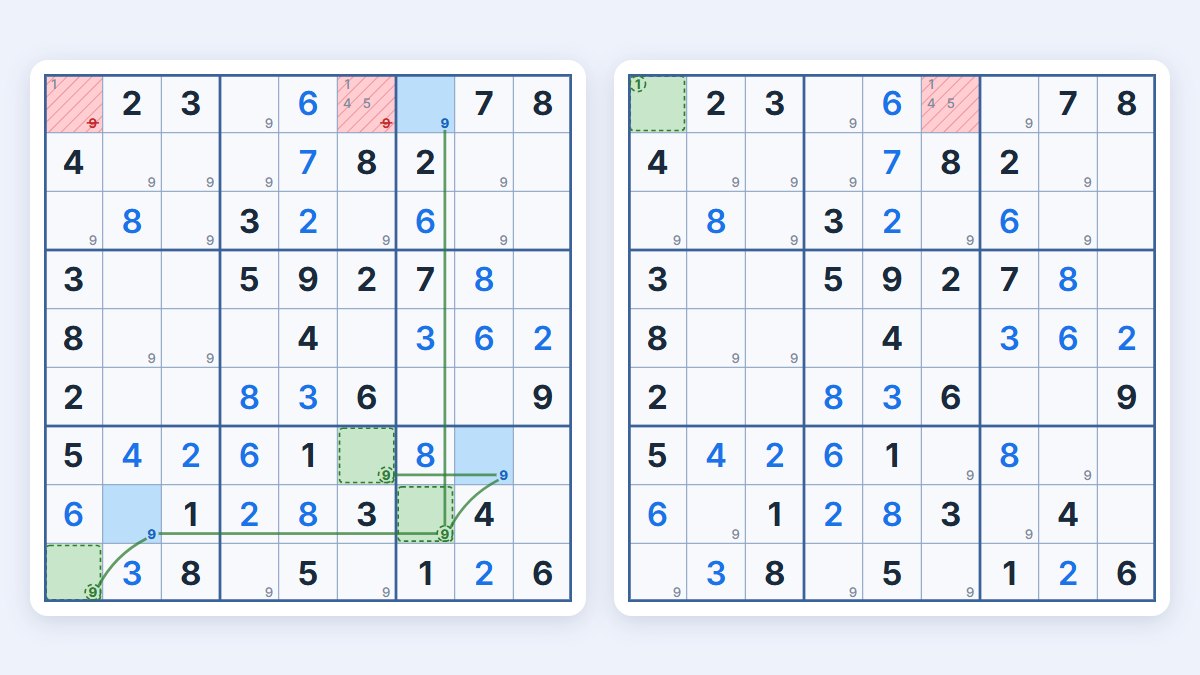
Simple Colouring in Sudoku: How It Works, on Real Puzzles
Simple colouring (simple coloring, or singles chains) in sudoku: both rules shown before and after on real Evil puzzles, and how often you will need it.
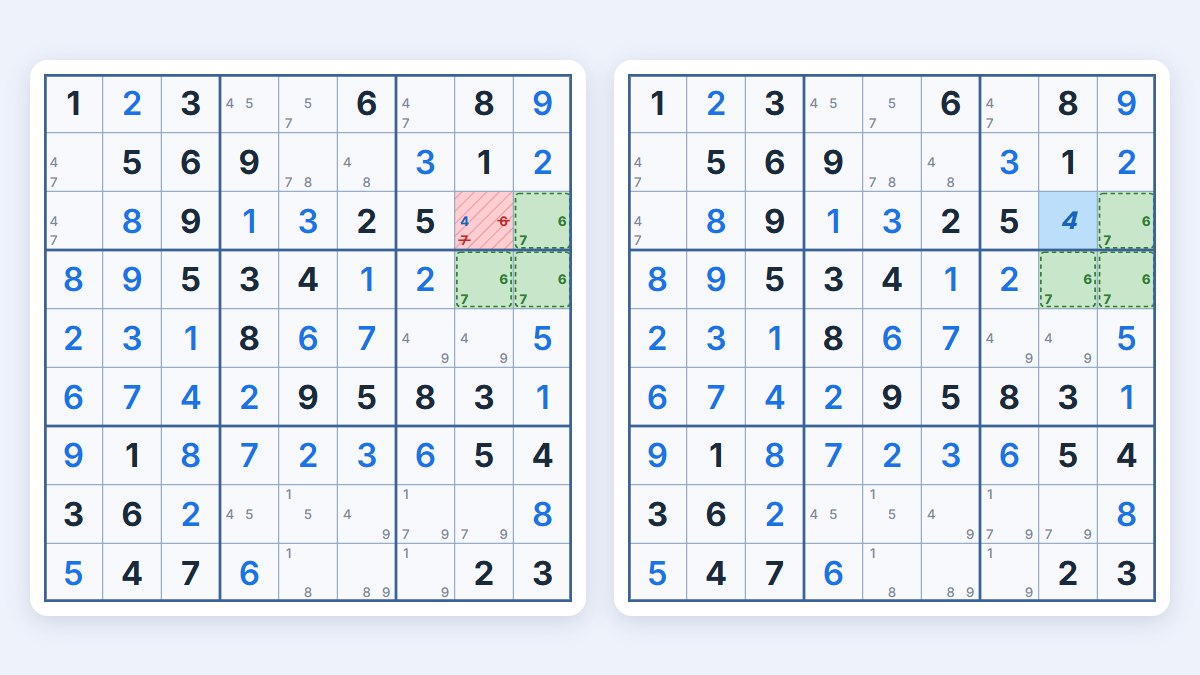
Unique Rectangles in Sudoku: How the Deadly Pattern Works
A unique rectangle works because a sudoku has one solution. A real Evil board before and after, what it does to a puzzle with two, and how rare it is.
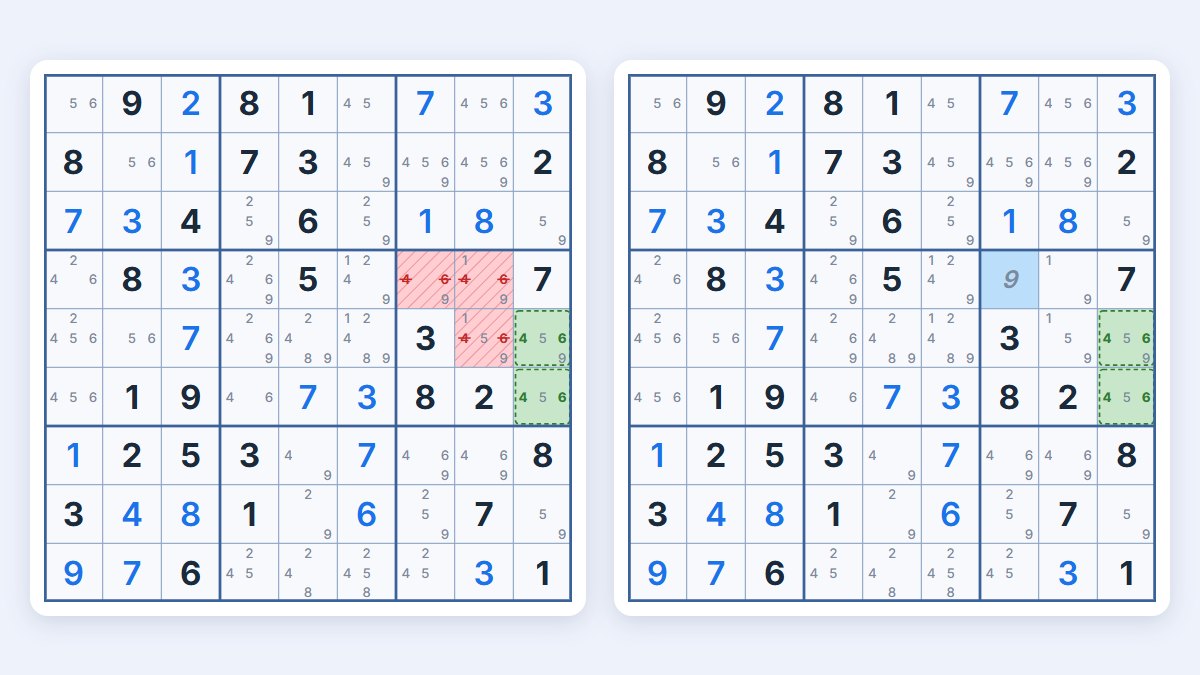
Locked Candidates in Sudoku: Type 1 Pointing and Type 2 Claiming
Locked candidates in sudoku on one real Hard puzzle: pointing and claiming before and after, how to scan for both, and how often our puzzles need them.
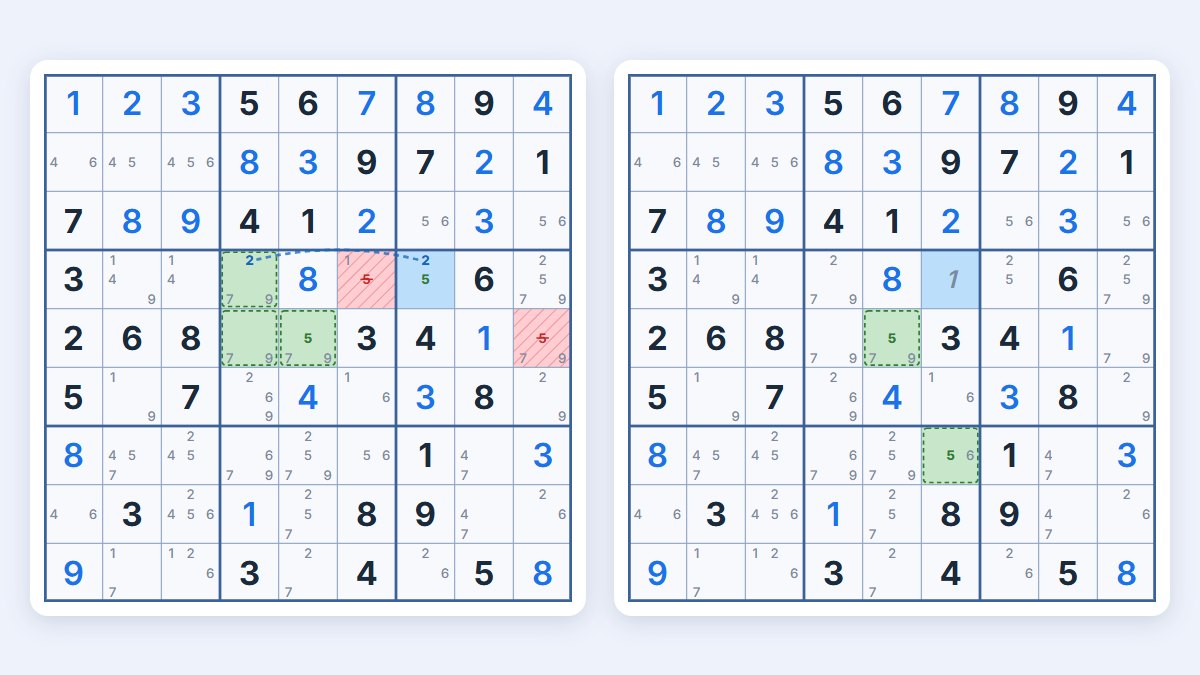
Almost Locked Sets (ALS) in Sudoku: The ALS-XZ Rule on Real Boards
Almost locked sets and the ALS-XZ rule, before and after on a real Evil puzzle: why it works, how to find one and how often our puzzles need it.
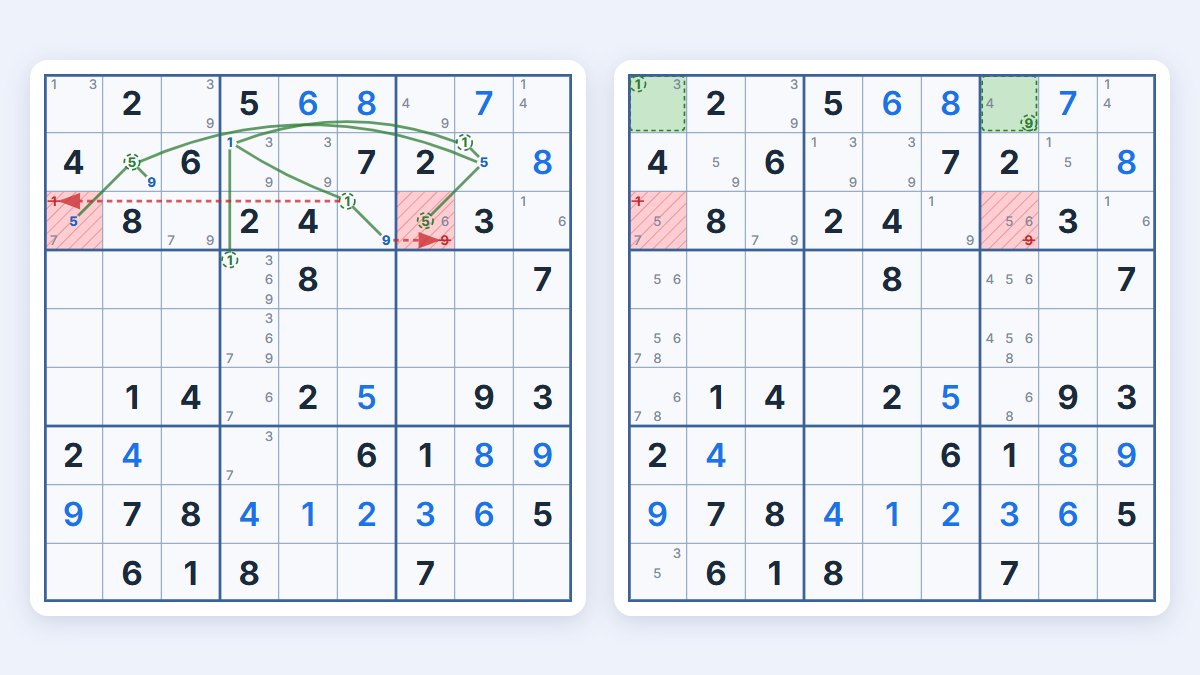
3D Medusa Sudoku: The Six Rules, Worked on Real Puzzles
3D Medusa colours candidates across digits until one colour must be true. The six rules on real Evil puzzles, and how often each one fires.
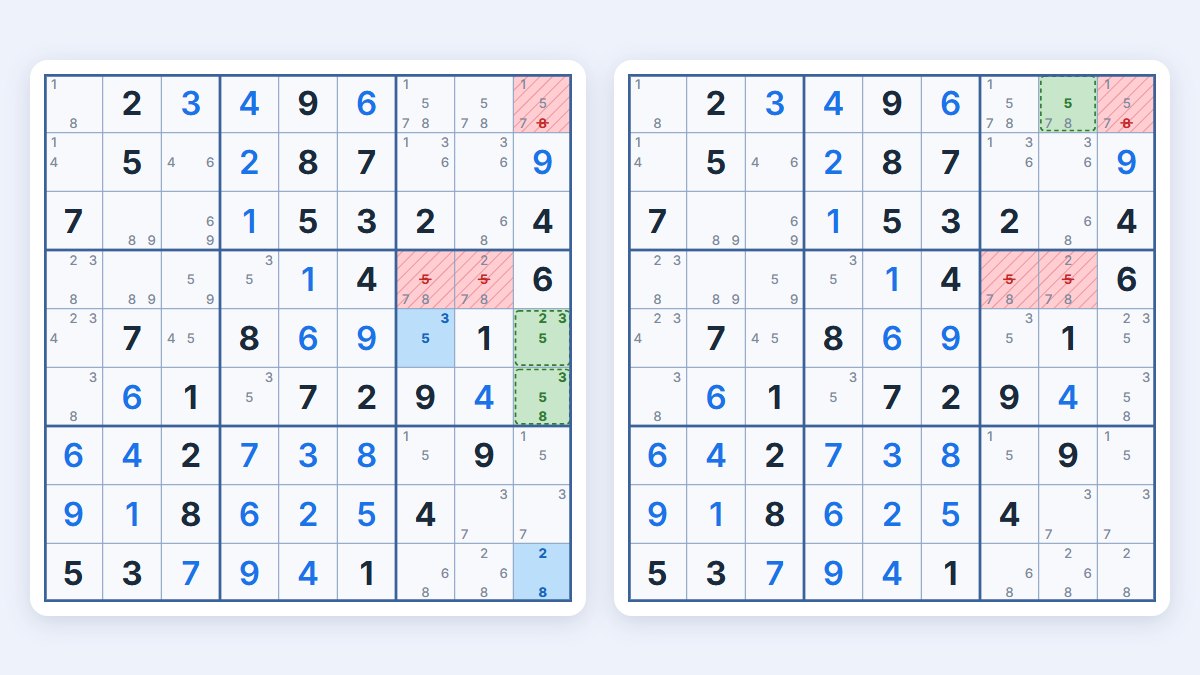
Sue de Coq Sudoku Technique: How It Works, on Real Puzzles
Sue de Coq shown before and after on two real Evil puzzles: which digits leave the line, which leave the box, and how rarely our puzzles need it.
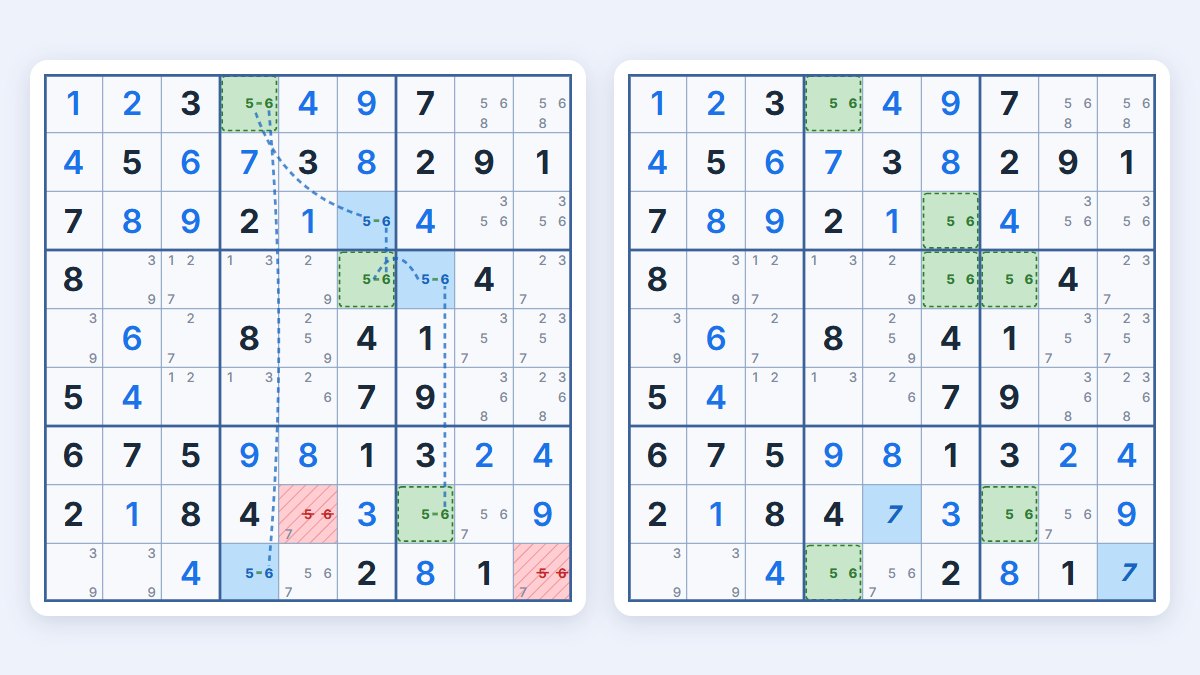
Remote Pairs Sudoku: How the Chain Works and Why It’s Rare
How a remote pair removes candidates, shown on a real Evil puzzle, and why it is so rare: once naked pairs are done, Simple Colouring finds it too.
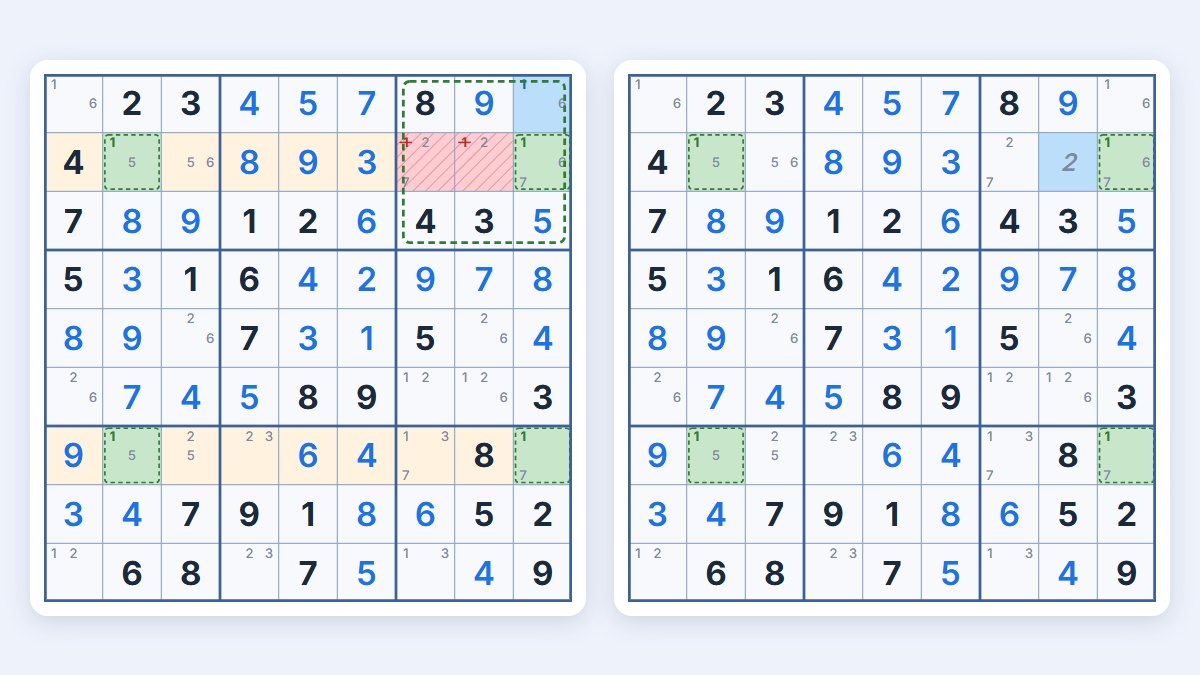
Finned X-Wing in Sudoku: How the Fin Works, on a Real Puzzle
A finned X-Wing is an X-Wing with an extra candidate. See why only the fin’s box loses the digit, on a real Evil puzzle, and how often you need one.
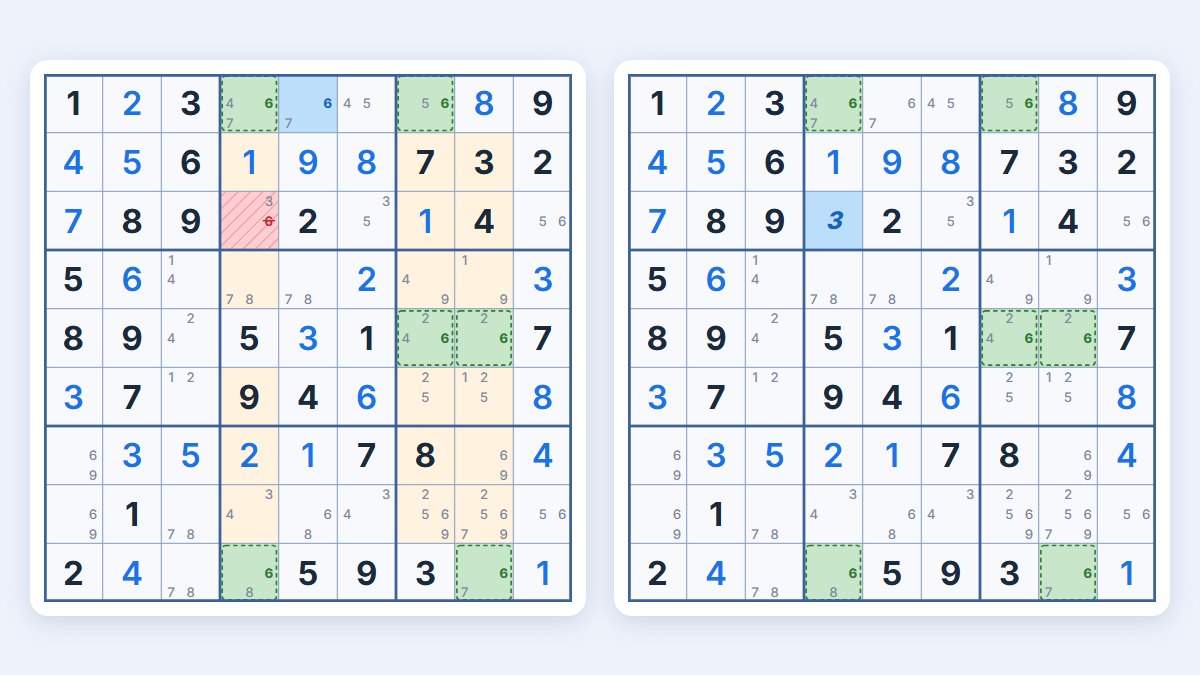
Finned Swordfish in Sudoku: How the Fin Works, With Real Examples
A Finned Swordfish is a Swordfish with one extra candidate, the fin. See what it removes on real Evil puzzles, and how often our solver needs one.

Sudoku vs Chess: Which Is Better for Your Brain?
Sudoku vs chess, honestly: what studies show about brain benefits, how a one-answer puzzle differs from a game with an opponent, and which to play.

History of Sudoku: Who Invented It and How It Went Global
Who invented sudoku, and when: Howard Garns’s Number Place (Dell, May 1979), Nikoli’s name (1984) and The Times (November 2004), every date sourced.
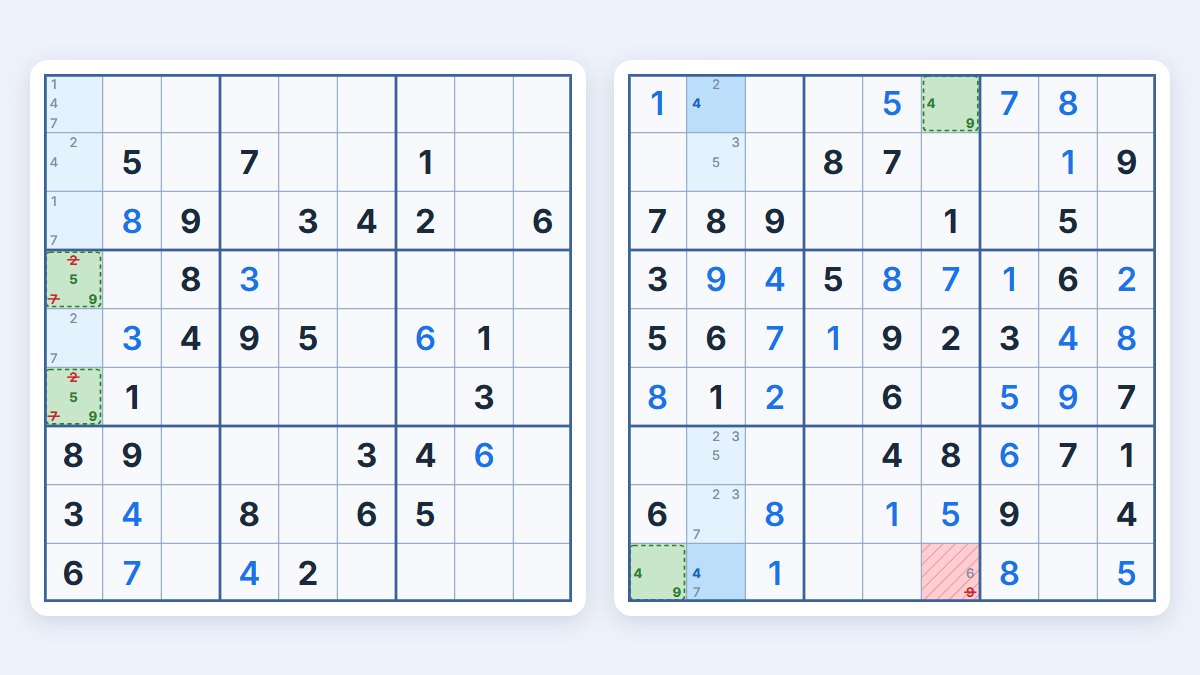
New York Times Sudoku Alternatives: Harder Levels and an Archive
What NYT Sudoku offers in October 2026, how hard its Hard is measured against our levels, and where to go next: Evil, Extreme, a daily archive, a trainer.